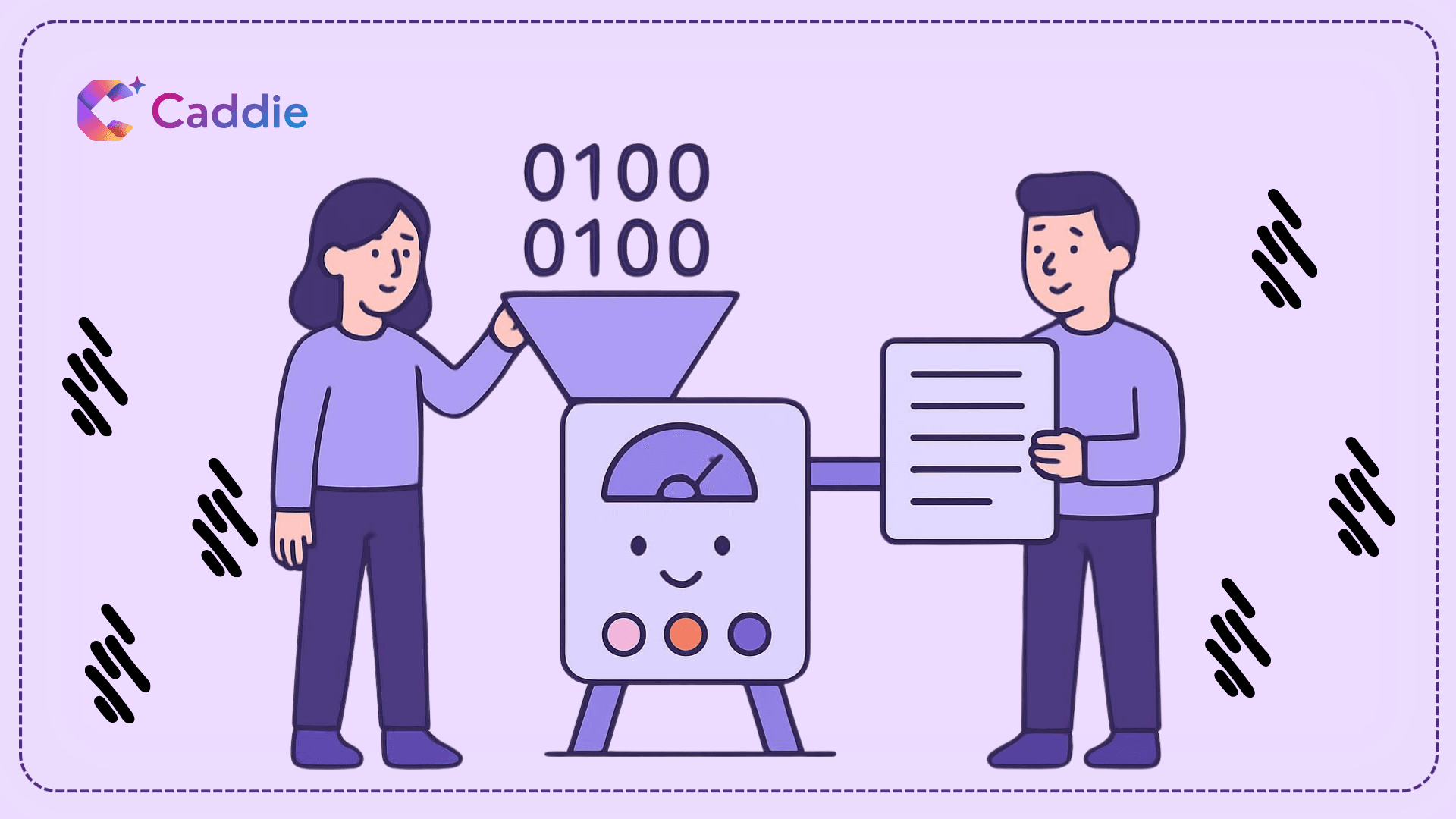
Natural Language Generation (NLG) is a branch of artificial intelligence that transforms structured data into readable, human-sounding text. If you have a spreadsheet full of numbers, NLG is the technology that analyzes those numbers and writes a comprehensive summary explaining what they mean.
If you are new to the AI world, you might ask: What does NLG stand for? It stands for Natural Language Generation. But what does NLG mean in a practical sense? It means that machines can now autonomously author content. While earlier topics cover how machines understand human intent or how they help query databases using everyday words, this post focuses strictly on the output. NLG is the voice of the machine. It is the final step in the AI pipeline where data becomes a story.
In this post, we will explain how machines write, exploring the mechanics, types, and real-world applications of this transformative technology.
The Architecture of NLG: How It Actually Works
To understand exactly how does NLG work, it helps to think of the system like a professional writer tasked with creating a report. The writer does not simply start typing blindly; they review the facts, decide on the main points, outline the structure, pick the right words, and finally check their grammar.
An NLG system follows a very similar multi-stage pipeline to turn cold data into an engaging narrative:
Content Determination (Deciding What to Say)
The system looks at the raw data and decides which pieces of information are actually important. If an NLG system is looking at a month of weather data, it will filter out the average days and highlight the record-breaking rainfall. It extracts the core message.
Document Structuring (Organizing the Flow)
Once the system knows what facts to include, it decides the order in which to present them. It builds an outline. In our weather example, it might start with the overall monthly temperature trend before moving on to the specific days of heavy rain.
Microplanning & Sentence Aggregation (Choosing Words)
This is where the text starts to take shape. The system selects the specific vocabulary and links concepts together. Instead of saying "Rain was heavy on Tuesday. Rain was heavy on Wednesday," it aggregates the sentences into, "Heavy rain persisted through Tuesday and Wednesday." It also decides on referring expressions, ensuring it uses pronouns correctly (e.g., replacing "the storm" with "it" in the next sentence).
Surface Realization (Applying Grammar)
In the final step, the software applies the grammatical rules of the target language. It ensures subjects and verbs agree, punctuation is placed correctly, and the final output reads smoothly and naturally.
The Three Levels of NLG Maturity
Not all text-generating software is created equal. When we talk about the types of NLG, we are generally referring to three distinct levels of sophistication, ranging from simple automation to advanced artificial intelligence.
Basic NLG (Rules & Templates)
This is the simplest form of text generation. It relies on predefined templates with fill-in-the-blank spaces. Think of a standard mail merge or an automated email from a bank saying, "Your account balance is [X] as of [Y] date." While highly accurate and easy to set up, basic NLG is rigid. It cannot generate original thoughts or vary its sentence structure beyond what a human programmer has explicitly written.
Advanced NLG (Data-to-Text)
This is where true intelligence begins. Advanced data-to-text systems do not just fill in blanks; they analyze structured data, identify trends, and generate contextual narratives. If you feed a complex dashboard of business intelligence data into an advanced NLG platform, it will write a customized executive summary explaining why sales dropped in Q3, using dynamic language that changes every time the data changes.
State-of-the-Art NLG (Large Language Models)
The most modern iteration of NLG involves neural networks and Large Language Models (LLMs). Unlike data-to-text systems that require structured spreadsheets, these models can generate highly creative, unstructured text based on simple conversational prompts. They predict the next logical word in a sequence based on vast amounts of training data. This is the technology behind tools that can write essays, brainstorm ideas, or draft creative fiction.
Top Business Applications and Use Cases for NLG
The adoption of text-generation technology is skyrocketing across industries. Here are some of the most prominent NLG examples and how businesses are utilizing an NLG application to streamline their operations.
E-Commerce & Retail
Online retailers often have thousands (if not millions) of products in their inventory. Writing unique, SEO-friendly product descriptions for every single SKU is a monumental task for a human team. NLG applications can automatically generate hundreds of thousands of distinct product descriptions by pulling data from manufacturer spec sheets, ensuring the catalog is always up-to-date and engaging.
Finance & Reporting
The financial sector is built on data, making it a perfect candidate for NLG. Financial institutions can use this technology to automate the writing of quarterly earnings reports, portfolio summaries, and compliance documents. Instead of analysts spending hours turning spreadsheets into written summaries, the software takes a fraction of time to generate a comprehensive, legally compliant report.
Media & Automated Journalism
Major news organizations rely on "robot journalism" to cover data-heavy events quickly. When a corporate earnings report is released or a local sports game ends, NLG software instantly pulls the data (the final score, the top scorers, the profit margins) and publishes a news brief before a human reporter could even open their laptop.
Healthcare
Doctors and nurses spend a significant portion of their day on administrative paperwork. NLG is being used to automatically generate clinical narratives, discharge summaries, and patient histories by extracting key data points from Electronic Health Records (EHRs). This reduces burnout and allows medical professionals to spend more time with patients.
The Tangible Benefits of Implementing NLG
Why are companies investing so heavily in text generation? The return on investment usually comes down to three major benefits.
Scale & Speed
The most obvious advantage is the sheer volume of content a machine can produce. A capable NLG system can probably write hundreds or thousands localized, highly specific narratives in the time it takes a human to write one. This speed allows businesses to report on data in real-time, giving them a competitive edge in fast-moving markets.
Consistency & Accuracy
Humans get tired. When a human is asked to write the same type of report fifty times a week, mistakes will inevitably happen. It’s rare for a data-to-text NLG system to make calculation errors or forget to include a crucial legal disclaimer. Furthermore, it ensures a consistent brand tone across all communications, whether it is generating one document or one million.
Hyper-Personalization
In marketing and customer communication, personalization drives engagement. Because NLG can operate at scale, companies can use it to send highly individualized communications. Instead of a generic monthly newsletter, a fitness app can use NLG to generate a unique email for every single user, summarizing their specific workout data, congratulating them on personal milestones, and offering tailored advice.
Leading NLG Tools and Technologies
The market for text generation is divided into a few key categories, with different tools catering to different enterprise needs.
Enterprise Data-to-Text Platforms
These tools are explicitly designed for businesses that need to turn internal data (like sales figures or inventory levels) into highly accurate reports. They require initial setup to map the data correctly, but they offer unparalleled accuracy and control over the final output.
Generative AI & LLM Assistants
These are the tools most people are familiar with today. While general purpose AI chatbots may not be as inherently tied to structured data pipelines as the enterprise platforms, their ability to draft marketing copy, emails, and brainstorm ideas makes them invaluable tools for content creators and marketers.
Challenges and Limitations of Modern NLG
Despite its incredible capabilities, the technology is not without its flaws. Understanding the limitations is crucial for any business looking to implement text automation.
The "Hallucination" Problem
This is primarily a challenge with Large Language Models. Because these systems predict the next word based on patterns rather than querying a database of absolute truths, they can sometimes generate information that sounds incredibly confident but is entirely fabricated. For businesses that require 100% factual accuracy, this means LLM outputs must be carefully reviewed by humans.
Data Quality Dependency
For data-to-text systems, the old adage "garbage in, garbage out" applies perfectly. An NLG system cannot write a brilliant, insightful report if the underlying spreadsheet is full of errors, missing values, or unstructured formatting. The text will only ever be as good as the data it is fed.
Bias and Ethical Concerns
NLG systems learn from large amounts of data. And if the data contains biased information, it can lead to unfair or biased text being generated, possibly resulting in stereotypes or content that may hurt or exclude certain groups of people. Another possibility is that biased system might generate misleading or harmful information. Hence, it’s a must that the training data and backend data resources are free from bias and regularly monitored.
Brand Voice & Nuance
While machines have mastered grammar and syntax, they still struggle with the subtle nuances of human emotion and brand identity. Capturing a brand’s specific sense of humor, empathy, or distinct corporate voice requires significant fine-tuning. Often, machine-generated text can feel a bit dry or generic without a human editor to polish it.
The Future of NLG
The global Natural Language Generation market is projected to grow at a CAGR of 21.8% from 2024 to 2030, reaching a market size of over $2.5 billion. As artificial intelligence continues to evolve at a breakneck pace, the future of text generation looks incredibly dynamic.
Multimodal Generation
We are moving away from systems that only generate text. The future (part of which has already arrived) involves multimodal AI, where a single prompt can generate an entire presentation, combining perfectly structured written narratives with custom-generated charts, images, and even audio voiceovers.
Real-time Adaptive Generation
Imagine reading a blog post or an article that rewrites itself based on your behavior. Future NLG systems may adapt content in real time based on user engagement. If the software detects that a user is skimming or losing interest in a dense technical paragraph, it could automatically generate a simplified, bulleted summary on the fly to keep the reader engaged.
Conclusion
Natural Language Generation is fundamentally changing the way we interact with data. By automating the transition from raw numbers to readable text, it frees up human workers from tedious reporting, allows for personalization at an unprecedented scale, and ensures that valuable data insights are communicated clearly and instantly. Whether it is writing a news brief, summarizing a medical file, or drafting a product description, machines have definitively learned how to write.
As technology continues to mature, overcoming hurdles like data dependency and hallucinations, NLG will become an invisible but essential part of how every modern business communicates.