Digital Adoption is the process of ensuring users fully understand and effectively use digital systems in their daily workflows. It helps organizations turn technology into a natural flow of how work gets done, improving productivity and maximizing the value of their technology investments.
Modern workplaces rely on a wide range of software platforms. Employees move between CRM systems, collaboration platforms, HR portals, analytics dashboards, and dozens of other applications every day. Research shows that the large enterprises may use between 125 to 200 SaaS applications. That’s a massive digital ecosystem.
However, access is not adoption. Another research shows employees use only 40% of enterprise software features on average, meaning organizations routinely pay full price for tools their teams are underutilizing. This gap is where effective technology adoption becomes critical.
What Is Digital Adoption?
At its core, this concept is about people, not technology. It happens when employees, teams, or customers feel comfortable using digital tools in their everyday work. It means the technology no longer feels new or complicated. Instead, it becomes familiar, intuitive, and seamlessly integrated into workflows.
For example, when a company introduces a CRM system, adoption does not occur simply because the tool is installed. It happens when sales teams naturally start using it to track leads, manage pipelines, and generate reports without hesitation. That shift, from having access to technology to actually using it effectively, is what digital adoption is all about.
Why Digital Adoption Matters More Than Ever?
Modern-day work is deeply connected to digital systems. Teams collaborate through online platforms, data is analyzed through dashboards, customer relationships are managed via CRM systems, and internal processes run on HR and finance software.
However, many employees feel overwhelmed by the number of tools they need to learn. Effective tool usage can reduce this friction, enabling employees to work more confidently and making workflows smoother and more efficient.
The Technology Adoption Gap
Many organizations assume that once a new system is launched, adoption will naturally follow. In reality, adoption rarely happens automatically. Enterprise software is powerful but often complex. Interfaces can be overwhelming, and traditional training programs are usually limited to onboarding sessions. Much of that information is forgotten when employees return to their daily tasks.
At the same time, software continues to evolve. Updates introduce new features and workflows, requiring users to adapt continuously. This creates the technology adoption gap, a situation in which technology exists but users never fully integrate it into their daily work.
Key Concepts Related to Digital Adoption
Digital Adoption is not a standalone process. It is supported by several key concepts that help organizations ensure their employees can effectively understand and use digital tools.
Digital Adoption Platforms (DAP)
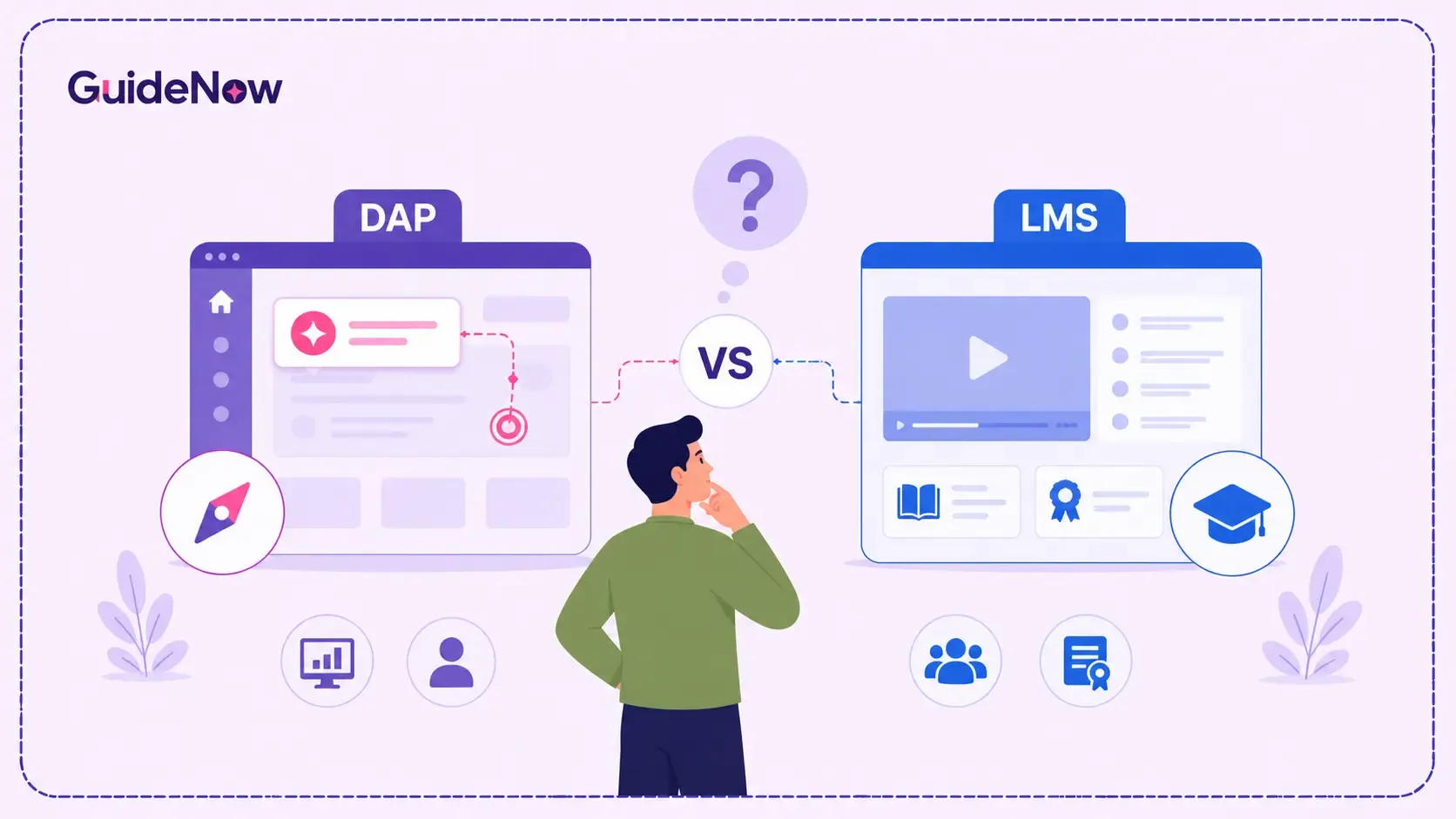
Software that sits on top of existing applications and provides in-app guidance, walkthroughs, and real-time support.
User Onboarding
A structured process that helps users get familiar with a tool from the start, reducing confusion and helping them become productive faster.
Change Management
Focuses on helping employees adapt to new systems and workflows to ensure smoother transitions and reduce resistance to change.
Product Adoption
Tracks how users engage with features over time, ensuring they continue using the product effectively and derive value from it.
User Experience (UX)
The overall design and usability of a platform. Intuitive and user-friendly interfaces make it easier for users to adopt tools without friction.
In-App Guidance
Real-time assistance within applications via tooltips, prompts, and walkthroughs, allowing users to learn as they perform tasks.
Employee Training & Learning
Continuous learning approaches that help users stay updated as tools evolve, moving beyond one-time training sessions.
What Successful Technology Adoption Looks Like?
When digital integration truly works, the shift inside an organization is hard to miss. Teams need less hand-holding, features actually get used, and people become comfortable navigating tools as part of their everyday work. Support requests start to drop, learning curves feel shorter, and workflows move more smoothly from start to finish.
Most importantly, users feel confident rather than overwhelmed. At that point, digital tools stop feeling like an extra set of effort and start becoming a natural, seamless part of how work gets done.
Technology Adoption Examples Across Teams
In sales teams, CRM systems gradually replace spreadsheets as the primary way to manage leads and track deals. In HR, self-service platforms enable employees to handle tasks like leave and payroll independently. In SaaS products, guided onboarding helps users understand features and integrate them into their daily workflows. These examples show that digital adoption is a gradual process where technology becomes a natural part of how work gets done.
The 5-Step Technology Adoption Framework
Organizations that succeed in technology adoption follow a structured approach that focuses on both technology and user behavior:
- Assess: Understand how users currently interact with digital tools. Identify gaps in usage, underutilized features, and areas where users struggle.
- Simplify: Reduce complexity in workflows and interfaces. Make it easier for users to complete tasks without confusion or unnecessary steps.
- Guide: Provide contextual in-app assistance, such as walkthroughs and prompts, so users can learn while performing tasks.
- Train: Enable continuous learning through microlearning, real-time support, and ongoing training, rather than relying on one-time onboarding sessions.
- Measure: Track key adoption metrics, including feature usage, engagement, and task completion rates, to continuously improve the experience.
User Adoption Lifecycle
Adoption of digital tools is not a one-time event. It evolves through different stages:
- Awareness: Users become aware of the tool and its purpose.
- Onboarding: Users learn how to use the tool and understand its key features.
- Adoption: Users begin using the tool in their daily workflows.
- Proficiency: Users become confident and use advanced features effectively.
- Optimization: Organizations refine usage, improve workflows, and maximize value.
Digital Adoption vs Digital Transformation vs User Adoption
| Concept | Focus | Example |
| Digital Adoption | Focuses on how effectively users use tools in their daily work. | Employees using CRM daily. |
| Digital Transformation | Focuses on implementing and integrating new technologies across the organization. | Company adopting AI tools. |
| User Adoption | Focuses on how individual users start using a product or feature. | Users exploring software features. |
In simple terms, digital transformation introduces technology, user adoption starts usage, and digital adoption ensures effective and consistent usage.
The Future of Digital Adoption
As organizations expand their digital ecosystems, technology adoption will become even more important in shaping how work gets done. AI-powered experiences, including personalized guidance, agentic AI systems, and zero-training interfaces, will drive the future. Instead of relying on traditional training, users will receive support directly within applications, making digital tools easier to learn and use.
Organizations that prioritize digital adoption will adapt faster to new technologies, improve workflows, and achieve stronger results from their digital transformation initiatives. Ultimately, success in the digital era will depend not only on investing in technology but also on ensuring people know how to use it effectively.
Conclusion
The true impact of technology is realized only when people know how to use it effectively. Organizations can invest in the most powerful platforms available, but if employees are not confident in using them in their daily work, that investment yields far less than it should. Digital Adoption is bridges that gap by turning a tool people have access to into one they actually use.
When teams navigate digital systems efficiently, productivity increases, workflows improve, and organizations begin to realize the full value of what they have built and bought.
Digital Adoption platforms are built to close the gap between technology deployment and genuine adoption, helping organizations ensure that every employee can use the tools they are given, confidently and effectively, from day one.