You know the answer exists somewhere. The contract clause sits in a PDF on a shared drive, the churn number lives in your warehouse, and the decision that explains both is buried in a chat thread from March. So you start hunting.
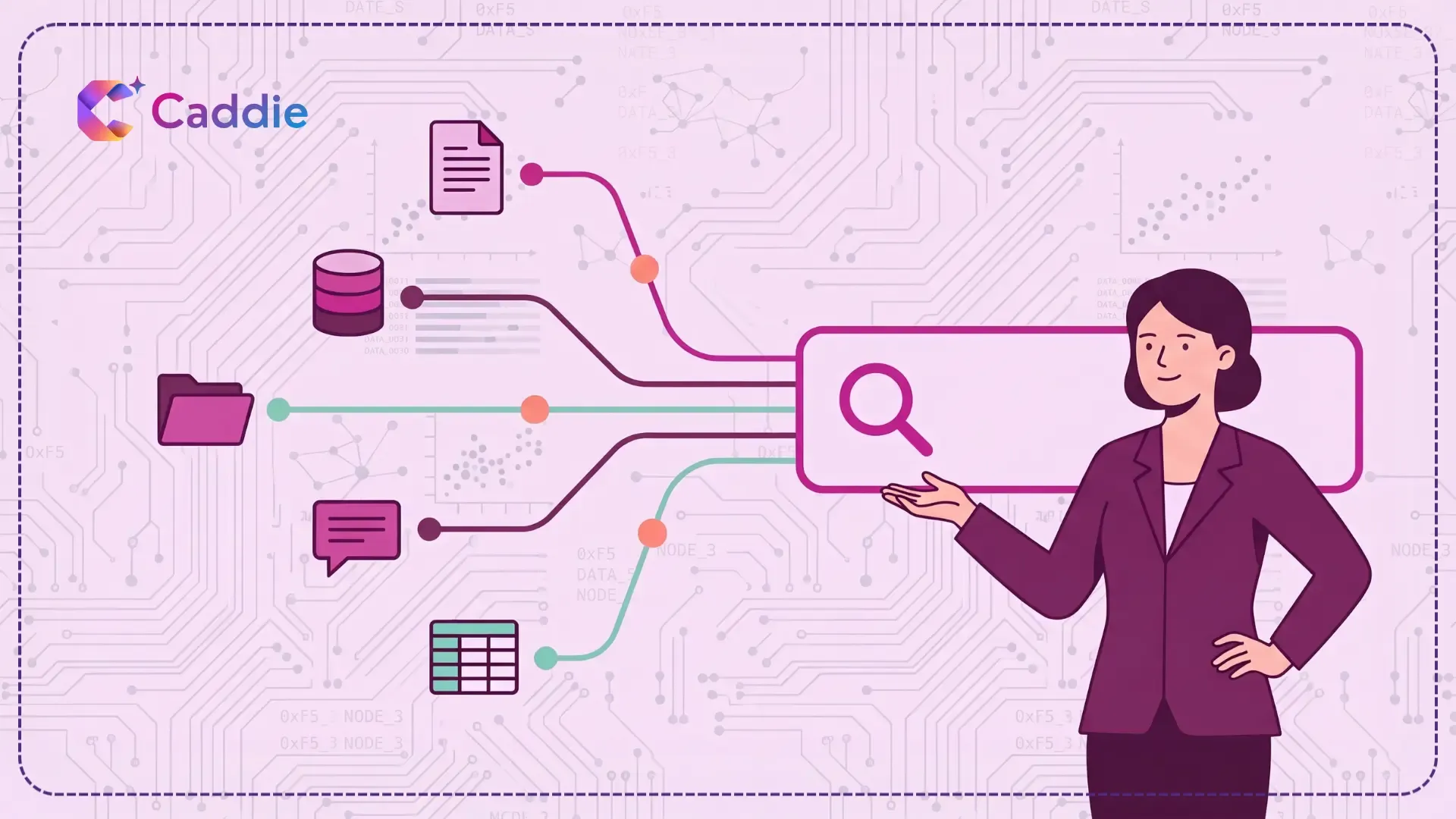
Enterprise search software exists to end that hunt. It connects to or indexes the systems your teams already use, then returns one ranked set of results across all of them, filtered by what each person is permitted to see.
If you are past the stage of learning the category and now comparing shortlisted vendors, this guide is built for you. It covers what these platforms genuinely do differently, the criteria that separate a strong deployment from a good demo, and the questions worth putting in front of a vendor before you sign anything.
What Enterprise Search Software Does Differently
A single search box is the visible part. The work happens underneath it.
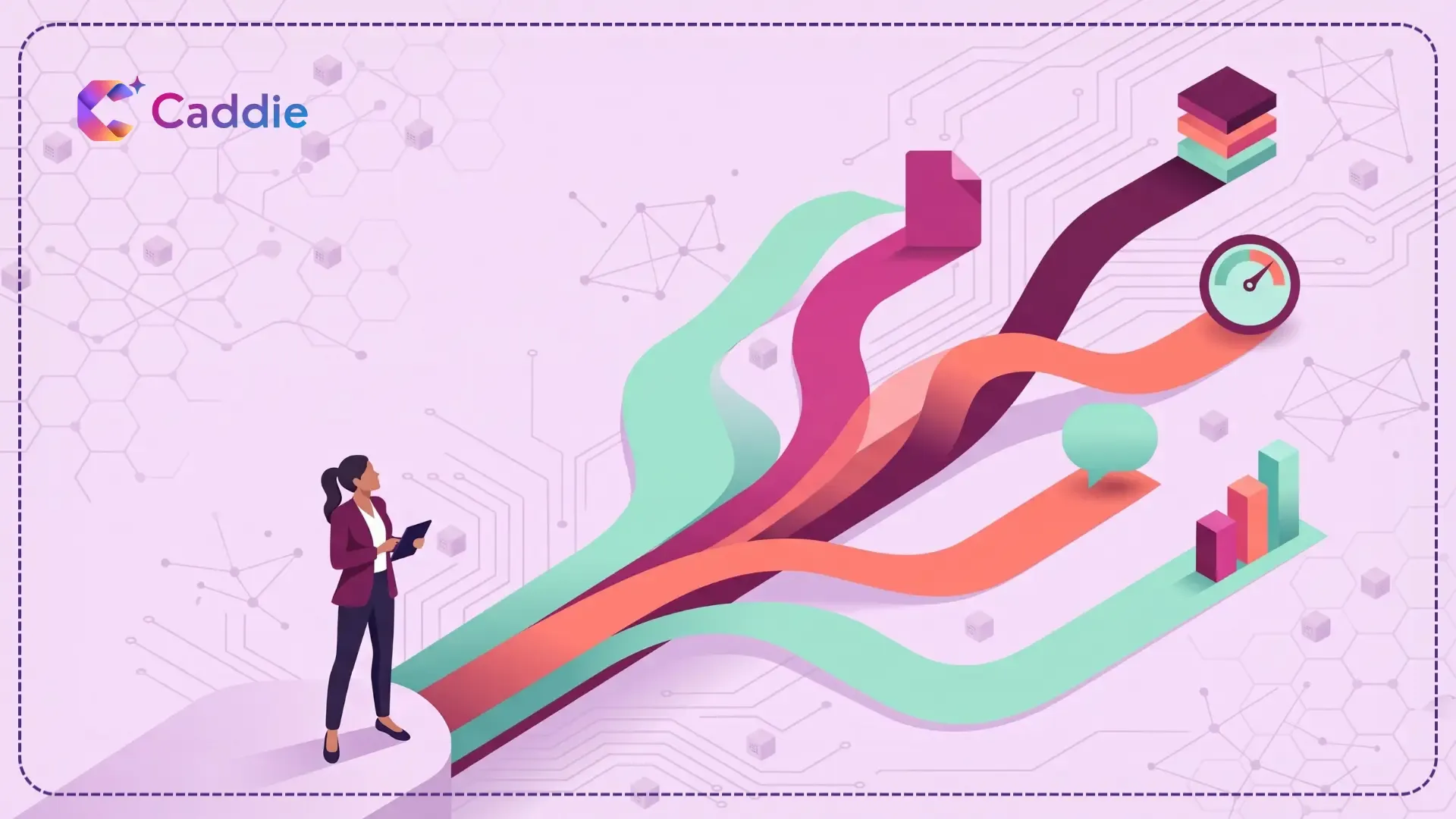
A capable platform maintains connectors to your content sources, whether that means a CRM, a document repository, a ticketing system, a wiki, an email archive, or a database. It normalizes what it finds into a common index, applies semantic understanding so that "parental leave policy" surfaces the right document even when the file is named "HR-2024-v3-final," and enforces each source system's access rules at query time.
Gartner now treats this as its own market that separates it from adjacent categories such as insight engines and conversational AI platforms. That distinction matters during procurement, because vendors from all three categories will show up in your evaluation calling themselves the same thing.
Why In-App Search Runs Out of Road
Every application ships with a search bar, and every one of them is blind outside its own walls. Each has a separate ranking model, a separate permission scheme, and a separate idea of what "recent" means. The work of stitching results together falls on the person asking the question.
That burden scales with your tool count. According to Gartner, the average desk worker now uses 11 applications, up from six in 2019, and 5% of workers use 26 or more. Asking someone to run the same query in eleven places is not a search strategy.
What Fragmentation Actually Costs You
The business case for a unified enterprise search platform is usually built on time, and the numbers are not small.
Gartner found that 47% of digital workers struggle to find information or data needed to effectively perform their jobs. McKinsey Global Institute research put the scale of the drain more precisely: the average interaction worker spends nearly 20% of the workweek looking for internal information or tracking down colleagues who can help. That same analysis found a searchable record of knowledge can reduce the time employees spend searching for company information by as much as 35%.
There is a duplication cost on top of the search cost. IDC research found that content silos and sprawl affect 50% of organizations, and that 22% of content gets replicated because people either cannot find the original or do not know it exists. Someone rebuilds a deck that already existed. That is not a knowledge problem, it is a retrieval problem.
And the exposure is not only about productivity. In the same research, 51% of businesses surveyed reported non-compliance with data regulations in the previous 12 months. When you cannot find sensitive content, you also cannot govern it.
Indexed, Federated, or Both
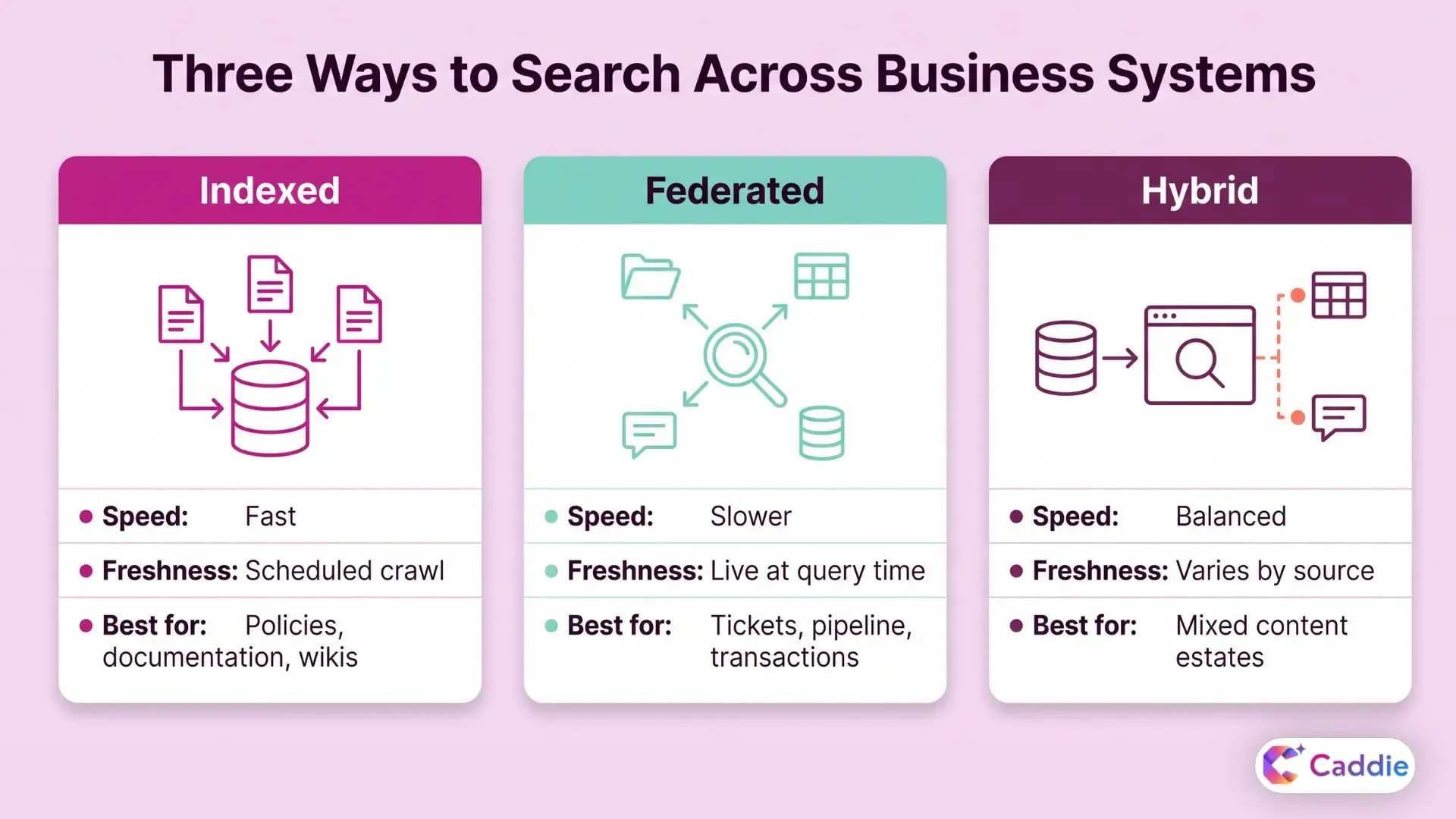
Most platforms take one of two approaches to search across business systems, and the choice has real consequences for what you can promise your users.
Indexed search crawls your sources on a schedule and builds a central index. Queries hit that index, so results come back fast and ranking can be tuned across sources. The trade-off is freshness: anything created since the last crawl is invisible until the next one.
Federated search queries each source live at the moment of the search and merges what comes back. Results are always current, and no copy of your content leaves its home system. The trade-off is speed and consistency, since you are only as fast as your slowest connector and ranking across heterogeneous sources gets harder.
Hybrid approaches index slow-moving content such as policies and documentation, while federating fast-moving records such as tickets, pipeline stages, and financial transactions. If your evaluation includes systems where a day-old answer is a wrong answer, ask specifically how each vendor handles that split rather than accepting "we do both."
How to Evaluate an Enterprise Search Platform
Nine criteria tend to separate platforms that survive year two from those that get quietly abandoned.
Connector Coverage and Depth
Count matters less than depth. A connector that reads file names and body text but ignores comments, version history, custom fields, or attachments will disappoint you within a month. Ask for a per-connector breakdown of what is actually extracted from each of your top five systems.
Permission-Aware Retrieval
Search must respect every source system's access controls, and it must do so at query time rather than at index time. Ask how fast a permission change propagates. If revoking someone's access takes a full re-crawl to take effect, you have built a compliance problem.
Document and Unstructured Content Handling
IDC estimates that 90% of data is unstructured, which means most of your institutional knowledge sits in documents rather than tables. Test how the platform handles scanned PDFs, spreadsheets with multiple tabs, presentations, and long contracts. Retrieval quality on messy real files is where demos usually diverge from production.
Relevance You Can Influence
Out-of-the-box ranking will be wrong for your organization in predictable ways. Check whether your team can boost authoritative sources, demote archived spaces, apply recency weighting, and promote curated answers for high-frequency questions, all without a vendor services engagement.
Cited Answers Over Confident Guesses
If the platform generates summarized answers, every claim should link to the specific source passage, and the system should say when it does not know. Unattributed answers are unverifiable, and unverifiable answers do not get trusted twice. Run your own adversarial questions during the pilot.
Index Freshness and Latency
Define an acceptable staleness window per source before you talk to vendors. Policy documents can tolerate a day. Support tickets and inventory levels usually cannot. Get the re-index interval in writing.
Security, Governance, and Audit
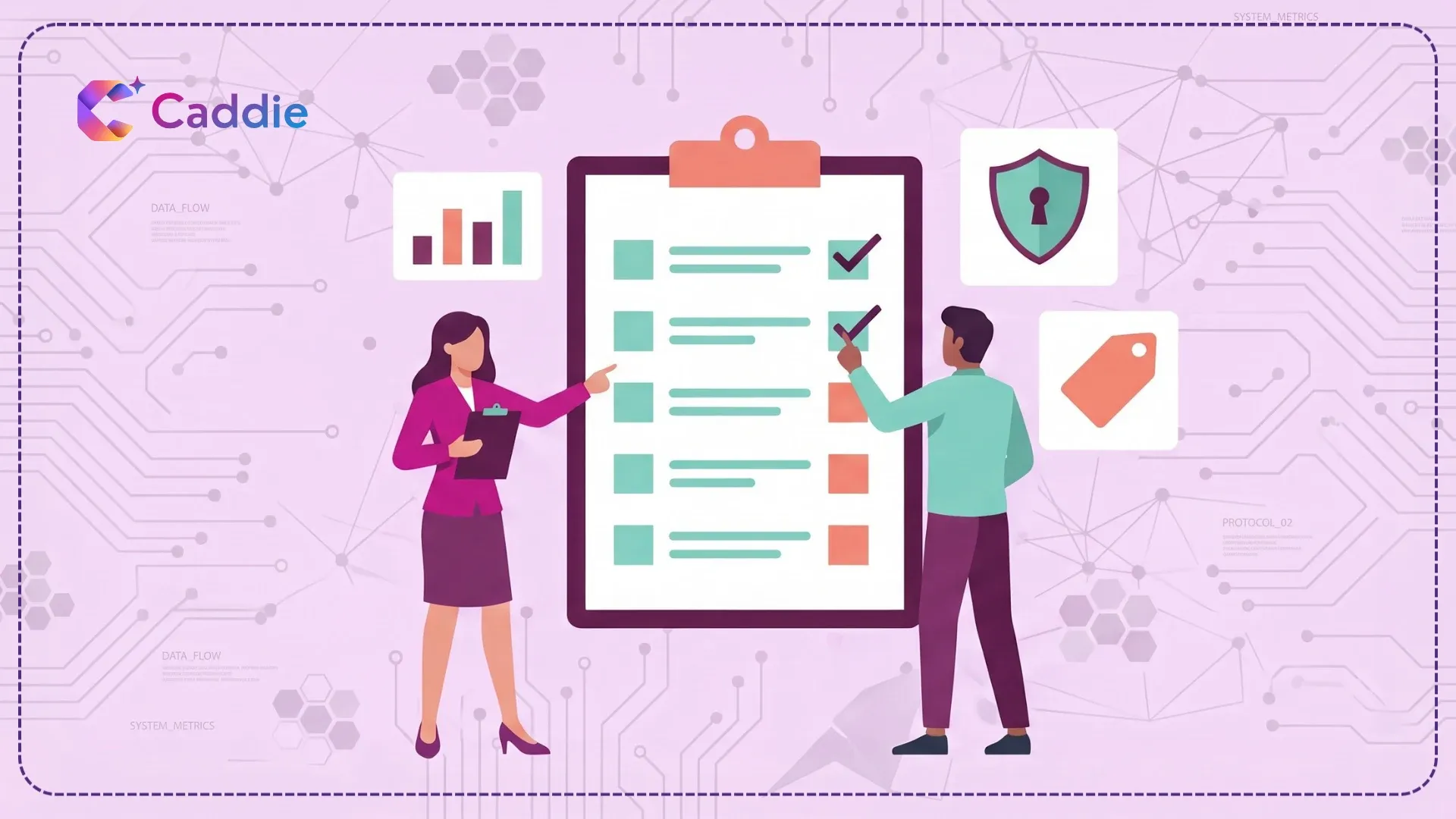
Look for single sign-on, multi-factor authentication, role-based access control, encryption in transit and at rest, and a query-level audit log. Your existing data governance framework should extend to search rather than being reinvented alongside it.
Time to First Value
Ask how long until the first connector is live and returning useful results, not how long the full rollout takes. Deployments that need six months of taxonomy work before anyone sees a result rarely survive a budget review.
Total Cost of Ownership
Model three years, not one. Include licensing, connector fees, indexed volume tiers, query volume overages, infrastructure, and the internal headcount required for tuning and connector maintenance. That last line item is the one vendors leave out.
Where Unified Enterprise Search Ends and Analytics Begins
This distinction gets blurred in vendor pitches, and it is worth being precise about during procurement.
Enterprise search finds and retrieves. Ask it where the renewal terms for a specific account are documented and it should return the clause. Ask it what your net revenue retention was last quarter by segment, and it can only surface a report someone already built.
Analytics answers computed questions. That capability comes from tools that query live data and calculate, which is the territory of business intelligence tools, natural language query interfaces, and conversational analytics platforms.
Most enterprises need both, because most real questions cross the line. "Why did margin drop in the Northeast" needs the numbers from your warehouse and the supplier contract that explains them. Deciding which platform owns which half of that question, before you buy, prevents an expensive overlap later. It also shapes how far your self-service analytics program can realistically reach.
Questions to Ask Before You Sign
Take these into your next vendor call:
- Show me your connector reading our three messiest systems, with our own content, not sample data.
- How quickly does a revoked permission take effect in search results?
- What is the re-index interval per source, and can we set it differently by source?
- Which relevance controls can our admins change without your services team?
- Where does a generated answer cite its source, and what happens when confidence is low?
- What does year three cost at double our current content volume and query load?
- Which parts of our question set are outside your scope, and what would we need alongside you?
That final question is the most useful one. A vendor who names their own limits is easier to plan around than one who claims none.
Caddie: Answers Across Your Documents and Your Data
Retrieval solves half the problem. The other half is asking a business question in plain language and getting a computed, sourced answer back.
Caddie is an enterprise AI assistant that connects your databases and documents, then answers questions conversationally with charts, tables, and Document Insights for PDFs, policies, and spreadsheets. It supports single sign-on, multi-factor authentication, and role-based access control, so people see only what they should. Caddie surfaces the evidence and keeps the decision with you.
Ask. Discover. Decide. Schedule a Caddie demo and bring your own questions.
Frequently Asked Questions
What is enterprise search software?
It is a platform that connects to multiple business systems, indexes their content, and returns one permission-filtered set of ranked results, so employees search once instead of app by app.
How is an enterprise search platform different from a web search engine?
It searches private internal content behind authentication, enforces each source system's access rules per user, and ranks results using organizational context rather than public links and traffic signals.
Does enterprise search work on documents as well as databases?
Yes. Strong platforms extract text from PDFs, presentations, spreadsheets, and scanned files, which matters because roughly 90% of enterprise data is unstructured rather than stored in tables.
How long does an enterprise search deployment take?
First connectors can return useful results within weeks. Full rollout across many sources, permission validation, and relevance tuning typically runs one to two quarters in larger organizations.
Do we still need analytics tools if we have enterprise search?
Usually yes. Search retrieves existing content. Calculating fresh metrics, trends, and segment comparisons from live data requires an analytics layer that queries and computes.