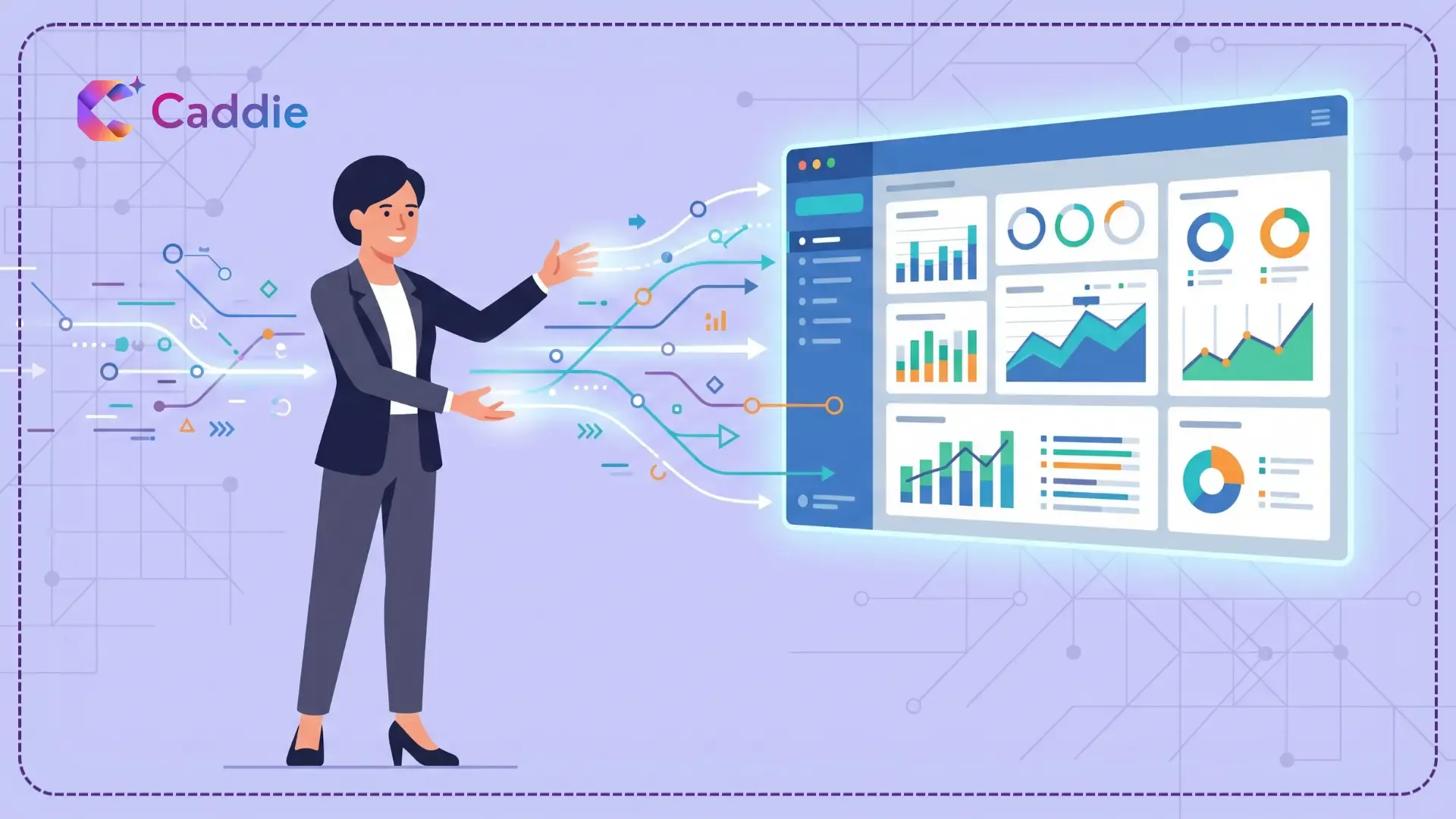
For years, getting an answer out of your data meant filing a request with the analytics or IT team, waiting days for a report, and hoping your question hadn't changed by the time the answer landed. That model is breaking down, and not because your IT team is failing. The pace of your business has simply outgrown it.
You can't afford to wait days to find out whether a campaign is working, whether a product line is underperforming, or whether a key account is showing early signs of churn. You make decisions in hours, not weeks. And the teams closest to those decisions, sales, marketing, operations, and finance, need data access that moves at the same speed.
That pressure is driving one of the most significant shifts in enterprise technology: the move toward self-service analytics. Across industries and company sizes, organizations are restructuring how data flows to decision-makers, replacing centralized bottlenecks with models that put analytical power directly in the hands of the business user.
This blog walks you through why that shift is happening now, what changed to make it viable, where enterprises still get it wrong, and what a mature self-service analytics environment actually looks like.
What Self-Service Analytics Actually Means for Enterprises
Self-service analytics is the capability that lets your non-technical business users, the ones without SQL expertise, data science training, or BI development skills, independently access, explore, and analyze data to answer their own questions.
That is not the same as handing everyone a login to a legacy BI tool and calling it data democratization. Traditional BI platforms still demanded significant training, IT-built report templates, and a level of technical literacy that most business users simply don't have. Modern self-service analytics goes much further.
It means your regional sales director can pull revenue trends by territory without asking anyone. Your marketing manager can slice campaign data by channel and cohort in real time. Your supply chain analyst can flag anomalies before they escalate. None of those workflows need a data team in the middle.
What made this possible is the maturation of AI-powered BI and natural language interfaces, tools that translate your business questions into queries automatically, without you needing to know how the data is structured underneath.
The Forces Pushing Enterprises Toward Self-Service
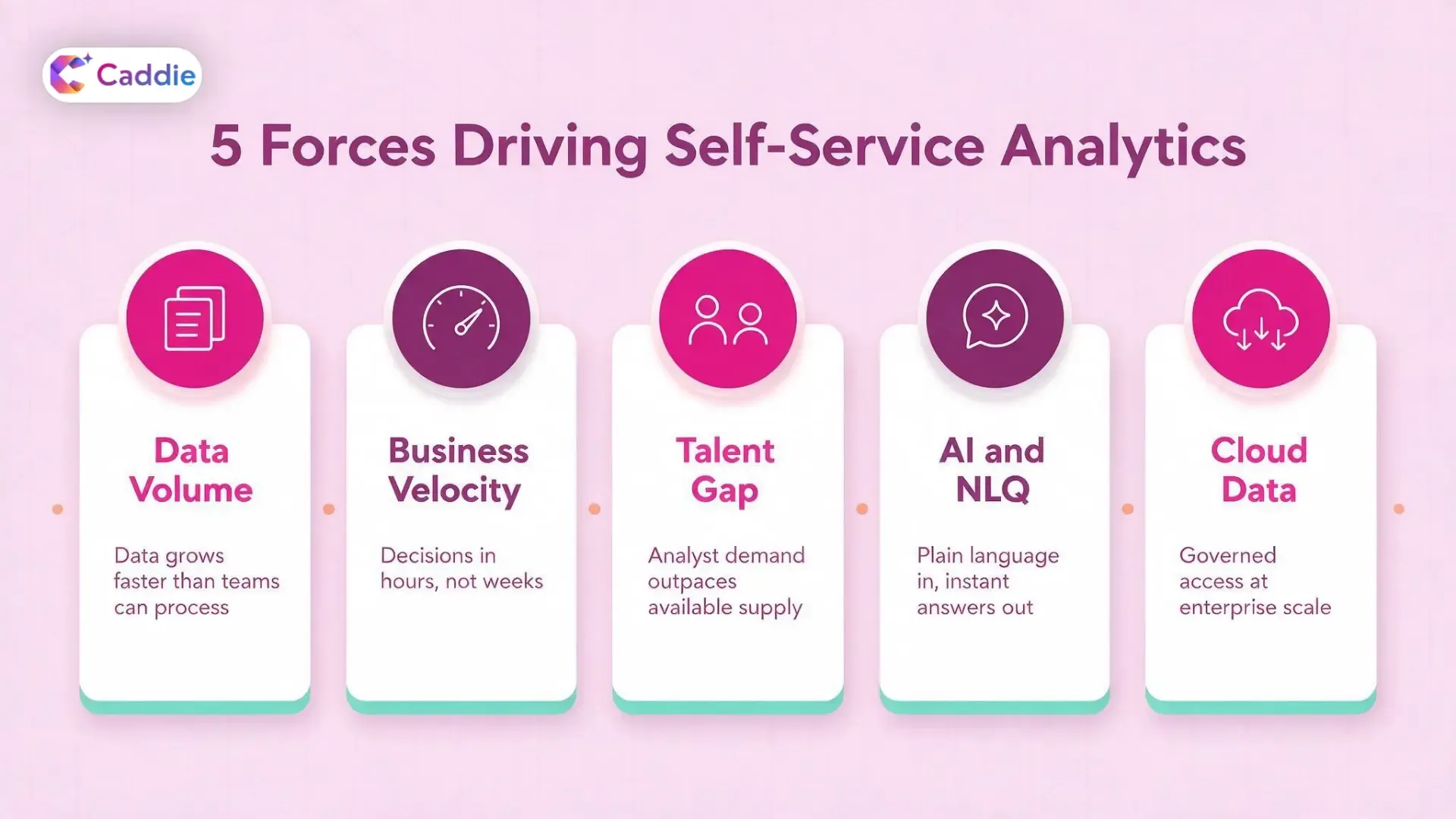
Data Volume Has Outpaced Centralized Analytics Capacity
The data your enterprise generates has grown faster than any analytics team's ability to process and surface it. At the same time, the ratio of business users to data professionals in most enterprises stays severely lopsided, often 50:1 or higher.
With that imbalance, centralized BI models create permanent backlogs. Your analytics team spends its days triaging requests, and your business users spend theirs waiting. The backlog isn't a resourcing problem that more headcount solves. It's a structural problem that needs a different approach entirely.
Business Velocity Has Increased Dramatically
Product cycles are shorter. Customer expectations are higher. Market conditions shift faster. In that environment, a weekly data pull or a quarterly dashboard update isn't a decision-support tool. It's a history lesson.
You need analytics that operate at the speed of your business. Real-time visibility into sales performance, operational efficiency, and customer behavior is no longer a competitive differentiator; it is a baseline requirement. Self-service analytics platforms that connect directly to live data sources make that possible in a way traditional report-scheduling workflows never could.
The Talent Gap Makes Centralization Unsustainable
Demand for data analysts and data scientists has consistently outpaced supply. Hiring, retaining, and scaling a centralized analytics function is expensive and slow. Many mid-market enterprises simply can't build the data team they need to serve every business function adequately.
Self-service analytics changes the math. Instead of routing every business question through a group of specialists, it distributes analytical capability to the people who already understand the business context best: your domain experts in each function.
AI Has Made Natural Language Querying Viable
Perhaps the most important enabler of modern self-service analytics is the maturation of AI and natural language query (NLQ) technology. Earlier attempts at self-service BI still asked users to learn tool-specific interaction models: drag-and-drop interfaces, filter hierarchies, chart configuration menus.
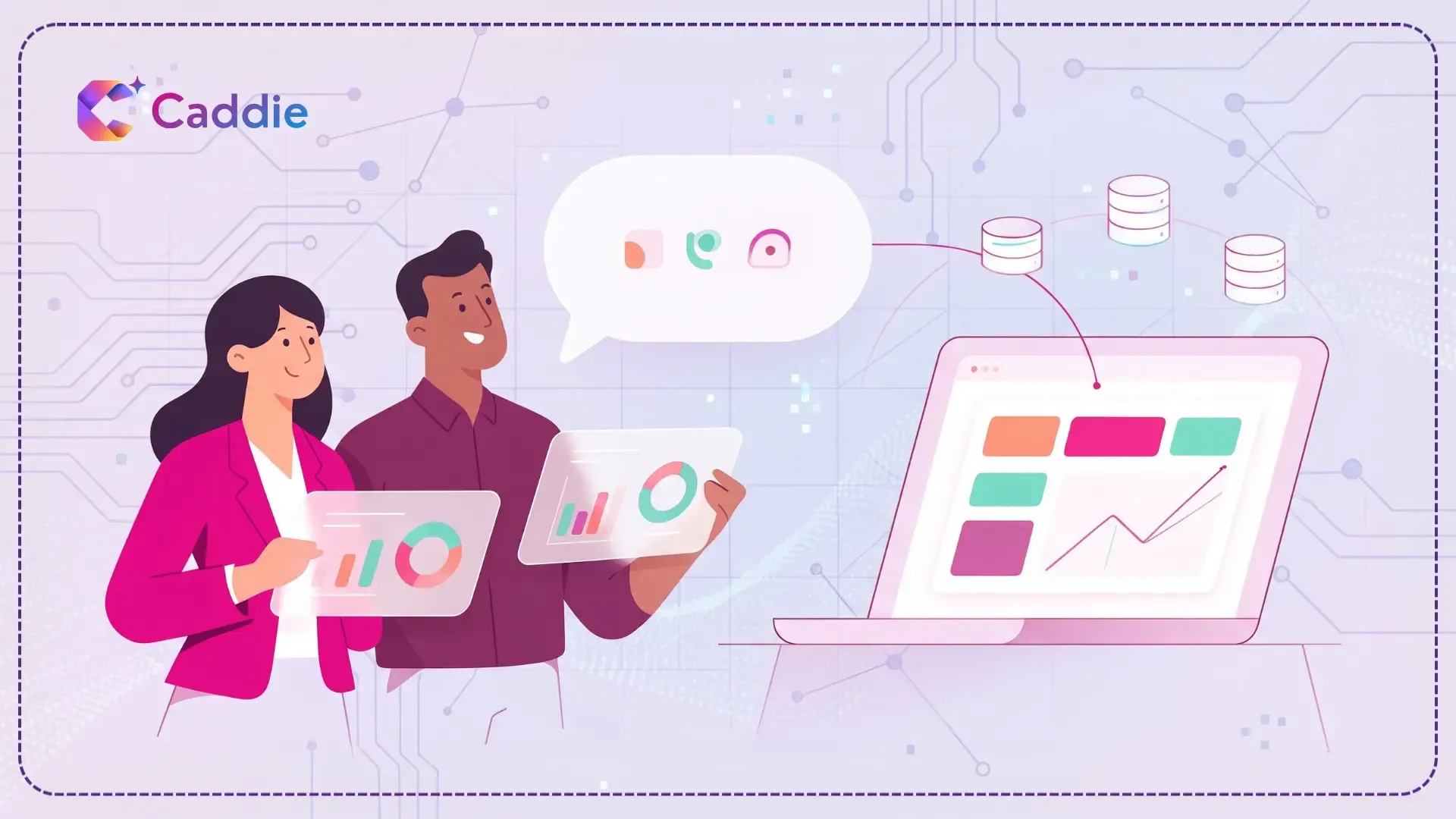
AI-powered platforms now let your team ask questions the same way they would ask a colleague, in plain language. "What are our top five accounts by revenue this quarter?" "Which product lines are trending down in APAC?" "Show me month-over-month retention for cohorts acquired in Q1."
The natural language processing underneath interprets intent, maps it to the right data, runs the query, and returns a visual answer, all without anyone writing a single line of SQL or configuring a single chart manually. That is the technological breakthrough that made genuine self-service accessible to your average business user, not just your power users.
Cloud Data Infrastructure Has Removed the Access Barriers
Self-service analytics only works when your business users can actually reach the data they need. For much of BI history, that access was restricted. Data lived in on-premise warehouses, behind firewall policies, in formats that only technical teams could interact with.
The migration to cloud data platforms has fundamentally changed this. Data is now more accessible, better governed, and more scalable. Modern analytics platforms can connect directly to these cloud sources and apply appropriate data governance controls on top, so self-service never means ungoverned access.
What Enterprises Get Wrong About Self-Service Analytics
The move toward self-service is well-intentioned, but it is often poorly executed. A few failure patterns show up again and again, and each one quietly undermines adoption and ROI.
Confusing Tool Access with Analytical Capability
Giving your business users a login to a BI platform isn't the same as enabling self-service. If the tool requires training to use, if the data model is opaque, or if the interface assumes technical knowledge, you end up with a tool that only power users adopt. Everyone else either falls back to spreadsheets or keeps relying on the analytics team.
Genuine self-service requires interfaces designed around the question, not the data structure. That is the core design principle behind conversational analytics: meet your users where they are, not where the data is.
Neglecting Governance in the Name of Speed
Some enterprises overcorrect. In the rush to democratize data, they strip out data governance guardrails entirely. What follows is conflicting numbers across departments, unauthorized access to sensitive data, and a steady loss of confidence in analytics outputs.
Strong self-service analytics is not ungoverned analytics. It requires a clear data governance framework that defines who can access what, ensures data quality, and maintains a single source of truth, while still giving your users the freedom to explore within appropriate boundaries.
Underestimating the Change Management Requirement
Technology is usually the easier part. The harder part is changing the behavior of business users who have spent years filing data requests and waiting for answers. Self-service adoption requires active enablement: training, use case champions, leadership messaging, and an internal culture that rewards data-driven decision-making at every level.
The Self-Service Analytics Maturity Model
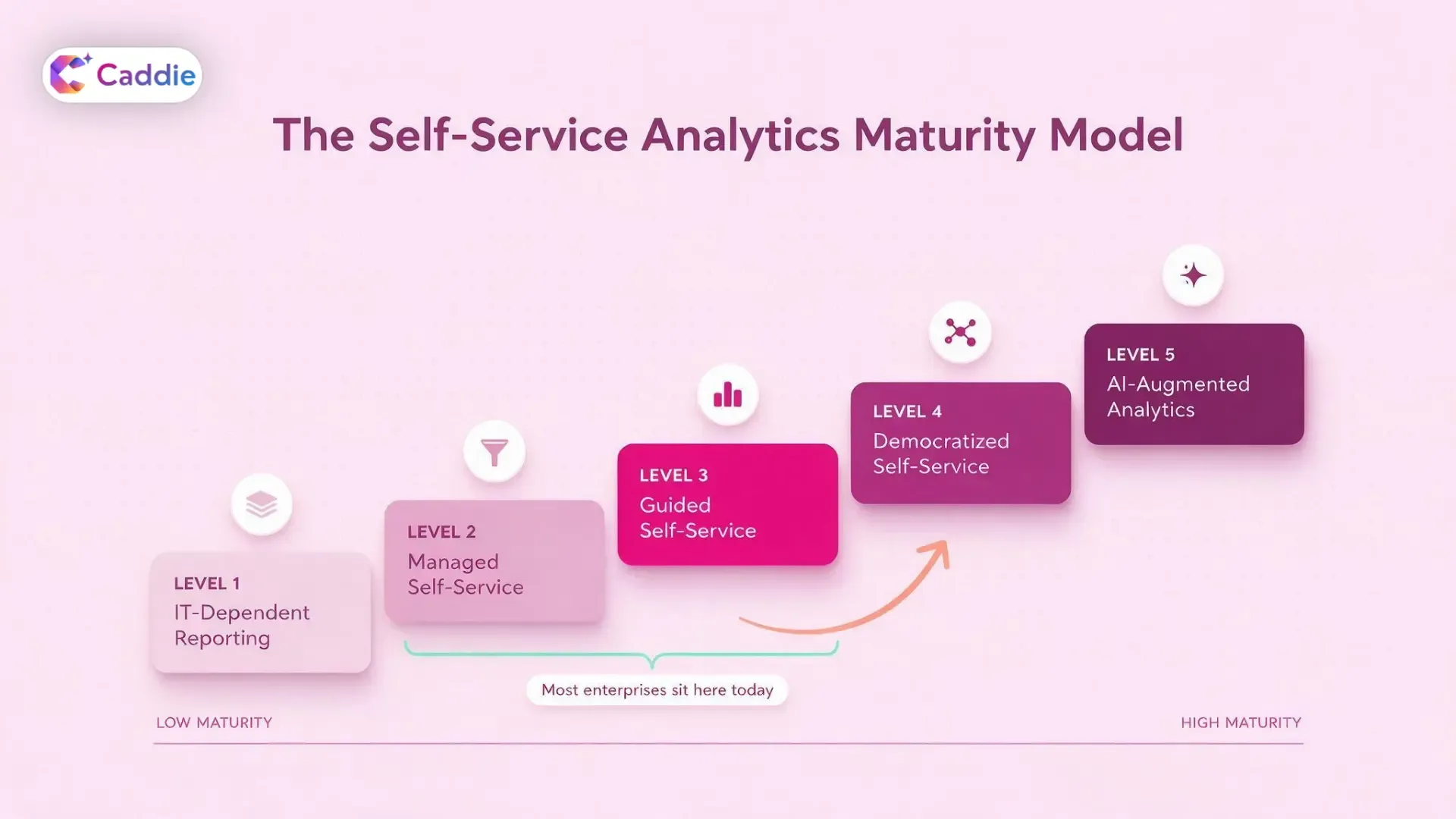
You don't arrive at self-service analytics overnight. The journey typically follows a recognizable maturity curve:
Level 1: IT-Dependent Reporting
All analytics requests go through IT or a central analytics team. Reports are static, scheduled, and slow. Business users have no independent data access.
Level 2: Managed Self-Service
Business users have access to pre-built dashboards and limited filter controls. They can slice existing reports but cannot build new queries or explore beyond defined parameters.
Level 3: Guided Self-Service
Power users in each function can build their own reports and dashboards using BI tools. General business users still rely on these power users. Governance is inconsistent.
Level 4: Democratized Self-Service
All business users can independently query data using natural language or intuitive interfaces. Governance is centralized and automated. Analytics is embedded in daily workflows, not a separate activity.
Level 5: AI-Augmented Analytics
The platform proactively surfaces insights without users needing to ask. Anomalies are flagged automatically. Recommendations are generated based on context. The system anticipates the next question.
Most large enterprises today sit between Levels 2 and 3. The market movement is toward Level 4 and beyond, with AI-augmented analytics becoming the defining capability of leading analytics platforms.
Why Conversational Analytics Is the Front Door to Self-Service
The interface your users touch decides whether self-service actually works. If that interface requires expertise, self-service stays theoretical. If it matches the way people naturally ask questions, self-service becomes real.
That is why conversational analytics has emerged as the most effective delivery mechanism for enterprise self-service. Instead of asking your people to learn a new tool, it asks them to do what they already know how to do: ask a question in plain language.
Pairing natural language understanding with natural language generation means the system can interpret an ambiguous business question and return the answer in narrative form. Not just charts, but a contextual explanation of what the data means and why it matters.
If your teams have historically found BI tools intimidating, that shift is transformative. It lowers the barrier to data access from "learn the tool" to "ask the question."
The Business Case: What Self-Service Analytics Delivers
Your investment in self-service analytics infrastructure, meaning platforms, governance, and enablement, is substantial. But when the implementation matures, the returns show up and they are measurable across multiple dimensions.
Faster Decision Cycles
Organizations with mature self-service capabilities consistently report shorter decision cycles. When your leaders can answer their own questions in minutes instead of waiting days for a report, your speed of response to market conditions, operational issues, and competitive moves improves materially.
Analytics Team Reallocation
When self-service absorbs the routine reporting and ad-hoc exploration that currently consumes most of your analytics team's capacity, that team can redirect toward higher-value work: predictive modeling, strategic analysis, data product development, and governance infrastructure.
Broader Data Literacy Across the Organization
Done well, self-service analytics doubles as a data literacy program. As your business users interact directly with data, seeing trends, forming hypotheses, and testing assumptions, their comfort with quantitative reasoning grows. Over time, you build an organization where data-driven thinking is embedded in decision-making at every level, not just at the top.
Competitive Positioning
In industries where decision speed is a competitive variable, such as retail, financial services, logistics, and SaaS, acting on real-time data faster than your competitors is a meaningful advantage. Self-service analytics is not just an efficiency play. It is an enterprise capability that directly affects your competitive outcomes.
How Caddie Enables Enterprise Self-Service Analytics
Caddie, our enterprise AI assistant, is built for exactly this. It connects directly to your enterprise data sources and puts a natural language interface on top, so your sales, finance, operations, HR, and marketing teams can ask questions in plain English and get instant, visual, narrative-backed answers.
Caddie handles the complexity underneath: schema interpretation, query generation, governance enforcement, and result explanation. Your users never see any of it. They just have a conversation with their data.
Ready to talk to your data? Book a Caddie demo.
Frequently Asked Questions
What is self-service analytics?
Self-service analytics lets your non-technical business users access, explore, and analyze company data independently, without IT or analyst help. AI and natural language interfaces make it usable by everyone.
How is self-service analytics different from traditional BI?
Traditional BI needed IT to build reports and manage access. Self-service analytics gives your business users direct, governed access through interfaces like natural language querying that require no technical training.
What are the biggest challenges in implementing self-service analytics?
The hardest challenges are cultural, not technical: changing ingrained request habits, keeping governance frameworks current with expanded access, and managing data quality at scale. Change management usually determines adoption success.
What is democratized data access?
Democratized data access means making data available to every relevant stakeholder, not just analysts and executives, so decisions at every level rely on accurate, timely information. Self-service analytics delivers it.
How does AI improve self-service BI?
AI lets you ask questions in plain language instead of query syntax, surfaces anomalies and trends proactively, generates narrative explanations of results, and automates data quality and access control.
What business intelligence trends are shaping self-service adoption?
Cloud-native data infrastructure, mature NLP query interfaces, generative AI inside analytics workflows, governed self-service with guardrails, and the convergence of BI with operational data into a real-time capability.